Pen Character Set Cartoon Vector Illustr: A Practical Guide for Creators and Educators
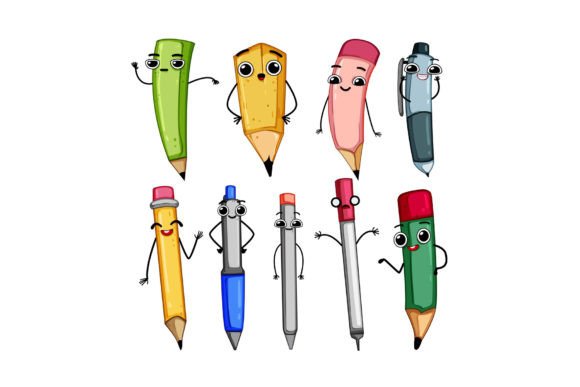
In the realm of digital design, educational publishing, and brand communication, visual consistency is often the difference between a project that resonates and one that gets lost in the noise. The Pen Character Set Cartoon Vector Illustr represents more than just a collection of cute drawings; it is a strategic asset designed to streamline workflows for professionals ranging from graphic designers to curriculum developers. These assets typically feature anthropomorphic writing instruments—pens, pencils, markers, and erasers—rendered as friendly, expressive characters. When executed as high-quality vector graphics, they offer scalability, flexibility, and a distinct visual voice that can be adapted across print and digital media.
For adults managing creative projects, understanding how to integrate these specific illustrations into a broader process is essential. Whether you are an educator creating lesson plans, a marketer designing a campaign for stationery products, or a publisher laying out a children's book, the decision to use a character set involves considerations of preparation, compatibility, and long-term usability. This guide explores the practical implementation of pen character sets, focusing on how they fit into real-world execution rather than just aesthetic appreciation.
Defining the Asset Within a Broader Workflow
A Pen Character Set Cartoon Vector Illustr is fundamentally a library of scalable graphics where each element is defined by mathematical paths rather than pixels. This technical distinction is critical for professionals who need to adapt visuals for various outputs, from small mobile app icons to large-format classroom posters. Unlike raster images, which degrade when enlarged, vector illustrations maintain crisp edges and clean lines regardless of the scale. In a production workflow, this means less time spent re-rendering or finding higher-resolution versions of the same asset.
These character sets usually include a variety of poses, expressions, and accessories. You might find a pen character holding a "school funny" sign, another looking confused with a question mark, or a group of stationery items collaborating on a task. The inclusion of elements like "education face" expressions allows creators to convey complex emotions or concepts without relying solely on text. For instance, a frustrated pencil character can visually represent the difficulty of a math problem, while a smiling marker can signify success. This semantic layer adds depth to the communication strategy, making the content more engaging for students or consumers.
Strategic Integration Before Project Execution
The most effective use of a pen character set begins during the planning phase, well before any actual design work commences. When initiating a project, such as developing a new educational workbook or launching a branding campaign for a stationery line, the selection of visual assets should align with the target audience and the intended message. Professionals should evaluate whether a cartoon style fits the tone of the brand. For serious academic materials, a subtle, professional illustration style might be preferred, whereas interactive learning apps or early childhood education resources benefit significantly from the playful nature of a Pen Character Set Cartoon Vector Illustr.
During this preparatory stage, it is crucial to assess the scope of the asset library. Does the set include enough variations to cover all necessary scenarios? If you are creating a series of videos or a multi-page document, you will need characters in different states of action. Checking for isolated symbols and vector components ensures that you can mix and match elements later. For example, if the set includes separate hands, bodies, and faces, you can create custom combinations without needing to commission new artwork for every minor variation. This foresight saves significant time and budget during the execution phase.
Furthermore, consider the color palette and style consistency. A cohesive look is vital for professional output. If your brand guidelines specify certain colors, ensure the vector files allow for easy recoloring. Most professional vector formats, such as SVG or AI, permit non-destructive editing of fill colors and stroke weights. This flexibility is a key factor in decision-making when purchasing or licensing these assets. It transforms a static image into a dynamic tool that can evolve with your project needs.
Implementation During the Creative Process
Once the planning phase is complete, the integration of the pen character set into the active workflow becomes a matter of efficiency and organization. In a typical design environment, these assets interact with other tools and resources to create a unified final product. Designers often import the vector files into software like Adobe Illustrator, InDesign, or Figma. Because the files are vector-based, they can be manipulated alongside typography, photography, and other graphical elements without compromising quality.
One practical application is in the creation of instructional materials. An educator or instructional designer might use a pen character to act as a guide throughout a document. By placing the character in the margins or at the start of chapters, the content feels more personal and less intimidating. The "school funny" aspect of these characters helps to break down barriers for learners, making complex topics approachable. For example, a "stationery student pen character sign" could be used to highlight important tips or warnings, drawing the reader's eye to critical information without disrupting the flow of the text.
Marketers and entrepreneurs also leverage these assets for social media campaigns and advertising. The ability to animate vector characters is a significant advantage in the current digital landscape. With tools like After Effects or Lottie, a static pen character can be brought to life with simple movements—winking, bouncing, or writing. This animation capability extends the utility of the original illustration, allowing a single asset to serve multiple purposes across different platforms. The interaction between the character and the surrounding layout must be carefully managed to ensure readability and visual hierarchy remain intact.
Ensuring Compatibility and Usability
Technical compatibility is a frequent concern when integrating third-party assets into existing workflows. Professionals must verify that the file formats provided are compatible with their primary design software. While industry-standard formats like EPS, AI, and SVG are widely supported, some niche applications may require conversion. It is advisable to test the files immediately upon acquisition to check for missing fonts, broken links, or complex effects that do not translate well.
Organization within the project folder structure is equally important. A disorganized asset library can lead to version control issues and wasted time searching for specific characters. Best practices suggest creating a dedicated folder for the character set, subdivided by category (e.g., "Happy Expressions," "Action Poses," "Accessories"). Naming conventions should be clear and descriptive, such as "Pen_Character_Holding_Sign_01.svg," to facilitate quick retrieval during the design process. This level of discipline ensures that the team can collaborate effectively, even if multiple people are working on the same project.
Quality Control and Long-Term Utilization
Maintaining quality control over the use of these illustrations is essential for preserving brand integrity. Consistency in how the characters are depicted—regarding scale, perspective, and expression—prevents the final product from looking disjointed. Establishing a style guide that outlines how the pen characters should be used can help enforce these standards. For instance, specifying that the characters should never be stretched disproportionately or placed against backgrounds that clash with their colors can prevent common design errors.
Long-term use of a Pen Character Set Cartoon Vector Illustr requires an understanding of its lifecycle. Trends in illustration styles change, but the fundamental appeal of friendly, relatable characters tends to endure, especially in education and children's markets. However, to keep the content fresh, creators should plan for periodic updates or expansions of the asset library. Adding new accessories, seasonal variations, or updated expressions can breathe new life into existing campaigns without starting from scratch.
From a business perspective, investing in a comprehensive character set can yield a high return on investment over time. Instead of paying for individual illustrations for every new project, having a robust library allows for rapid deployment of visual content. This efficiency is particularly valuable for small business owners and freelancers who operate with limited resources. The ability to quickly generate consistent, high-quality visuals enables them to compete with larger agencies that have dedicated art departments.
Optimizing Outcomes Through Strategic Use
The ultimate goal of integrating a pen character set is to enhance communication and achieve specific outcomes. For educators, this might mean increased student engagement and better retention of information. For marketers, it could result in higher click-through rates and stronger brand recall. The success of these outcomes depends on how thoughtfully the assets are applied within the context of the project.
Consider the narrative potential of the characters. A story-driven approach, where the pen characters embark on a journey through the material, can transform a dry manual into an engaging experience. This method leverages the emotional connection users form with the characters, making the content more memorable. Additionally, using these characters to personify abstract concepts can simplify complex ideas, making them accessible to a wider audience.
In conclusion, the Pen Character Set Cartoon Vector Illustr is a versatile tool that, when understood and applied correctly, can significantly enhance the efficiency and impact of creative projects. By approaching its use with a focus on planning, technical compatibility, and strategic integration, professionals can maximize the value of these assets. Whether you are designing a classroom resource, marketing a product, or building a brand identity, the thoughtful application of these vector illustrations can provide a competitive edge and a unique visual language that resonates with your audience.