Children Presenting Cyborg at Robotics C: A New Era of Youth Innovation
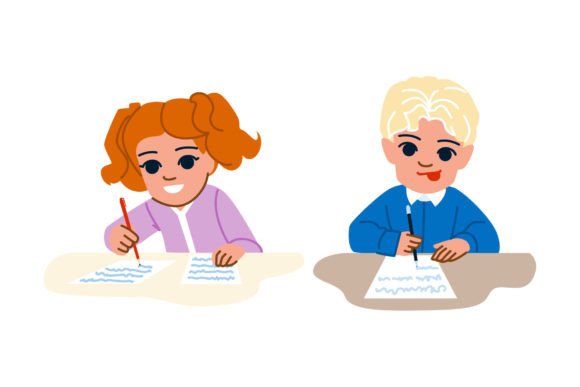
The image of Children Presenting Cyborg at Robotics C captures more than just a classroom moment; it encapsulates a profound shift in how we view the next generation of creators. Feast your eyes on this dynamic vector illustration showcasing children at the forefront of innovation, proudly exhibiting a cyborg at a robotics class. Watch as they eagerly point to their creation, a clear representation of the intersection between creativity and the future—robotic technology. This compelling graphic serves as a magnificent embodiment of education, school projects, and the immense potential that lies within youth for technological advancement. Dive into this vibrant depiction of the new world where technology and education converge, perfect to galvanize your audience's imagination about the limitless possibilities of the future.
This scene is not merely illustrative fluff; it represents a tangible reality in modern STEM education. The "Cyborg" here is likely a student-built humanoid robot or an advanced prosthetic prototype, symbolizing the merging of biological intuition with mechanical precision. For professionals, educators, and business leaders observing this trend, the implications are significant. We are moving away from passive consumption of technology toward active, hands-on creation by individuals who have grown up with digital interfaces as native languages.
The Evolution of Classroom Creativity
The concept of Children Presenting Cyborg at Robotics C reflects a broader evolution in pedagogical strategies. Traditional science classes often relied on rote memorization of formulas and historical facts. Today, the focus has shifted toward experiential learning, where students solve real-world problems using tangible tools. The robotics class depicted in the illustration is a microcosm of this change. It is no longer enough to understand how a motor works; students must now integrate motors, sensors, and code to create a functional entity that mimics life.
This shift mirrors changes in the professional workforce. Modern employers seek candidates who can adapt, iterate, and build solutions from scratch. By engaging in projects like building a cyborg, children develop critical soft skills alongside technical knowledge. They learn collaboration when debugging code together, resilience when a mechanism fails, and communication when presenting their work to peers and teachers. The "presentation" aspect highlighted in the title is crucial. It forces young minds to articulate their thought processes, turning abstract engineering concepts into understandable narratives.
From Theory to Tangible Reality
In the past, the idea of a child building a sophisticated robotic system was reserved for elite competitions or university labs. Now, accessible hardware, open-source software, and affordable 3D printing have democratized these fields. The "Robotics C" in our context could represent a specific curriculum module, a coding language level, or simply the third iteration of a project cycle. Regardless of the specific label, the outcome remains consistent: students are producing work that rivals early-stage prototypes in professional settings.
This accessibility means that the gap between educational theory and industrial application is narrowing. When a student points to their creation with pride, they are demonstrating an understanding of systems integration that was once considered advanced. This practical exposure prepares them for a future where automation and artificial intelligence are ubiquitous. They are not just learning to use technology; they are learning to design it.
Aligning with Modern Market Trends and Workflows
For business owners and marketers, the rise of projects like Children Presenting Cyborg at Robotics C signals a changing landscape in user expectations and product development. As the current youth cohort enters the workforce, they will bring with them a deep-seated expectation for interactive, customizable, and transparent technology. They will demand products that allow for modification and integration, much like the modular robots they built in school.
This trend influences how companies approach product lifecycles. The linear model of design, manufacture, and sell is being replaced by agile, iterative workflows that mirror the engineering process seen in these classrooms. Businesses that fail to recognize this shift may find themselves disconnected from their future customer base. Conversely, organizations that embrace these principles of rapid prototyping and user-centric design will be better positioned to innovate.
- Adaptive Workflows: Companies are increasingly adopting agile methodologies that prioritize flexibility over rigid planning, mirroring the trial-and-error nature of student robotics projects.
- Cross-Disciplinary Collaboration: Just as a robotics project requires knowledge of mechanics, electronics, and coding, modern businesses value teams that blend diverse skill sets to solve complex problems.
- User Empowerment: Consumers today expect to customize their tech experiences. The mindset fostered by building a cyborg encourages users to see themselves as co-creators rather than passive consumers.
The Role of Visualization in Communication
The visual element described—a dynamic vector illustration—is itself a powerful tool in modern communication. In an era dominated by digital media, the ability to convey complex ideas through compelling visuals is essential. The image of children presenting their work serves as a narrative device that instantly communicates themes of hope, progress, and ingenuity. For educators and institutions, such imagery is vital for securing funding, attracting students, and engaging parents.
Furthermore, the aesthetic of "cyborg" technology in educational settings helps demystify advanced concepts. By framing robotics as something creative and artistic, rather than purely industrial, schools can attract a wider demographic of students. This inclusivity is critical for ensuring a diverse pipeline of talent in the tech sector. When students see themselves reflected in these futuristic scenarios, their engagement levels rise, leading to deeper learning outcomes.
Practical Implications for Educators and Professionals
For educators, the lesson from Children Presenting Cyborg at Robotics C is clear: provide the tools, set the challenge, and step back. The most effective learning environments are those where failure is viewed as a data point rather than a deficit. Teachers act as facilitators, guiding students through the complexities of engineering while allowing them ownership of the final product. This approach fosters intrinsic motivation, which is far more sustainable than external rewards.
Professionals in the tech industry should also take note. The rapid pace of innovation means that formal degrees alone are no longer sufficient. Continuous learning and the ability to pick up new technologies quickly are paramount. The habits formed in a robotics class—debugging, iterating, and collaborating—are directly transferable to high-stakes corporate environments. Companies investing in mentorship programs that connect experienced engineers with young innovators can bridge the gap between academic curiosity and professional expertise.
- Invest in Hands-On Learning: Schools and training centers should prioritize resources that allow for physical construction and testing, not just simulation.
- Encourage Public Presentation: Regular opportunities for students to showcase their work build confidence and refine communication skills.
- Foster Interdisciplinary Projects: Combine art, ethics, and engineering to create holistic learning experiences that reflect real-world complexity.
Bridging the Gap Between Imagination and Industry
The intersection of creativity and robotic technology is where the future is being written. The "limitless possibilities" mentioned in the description are not hyperbole but a realistic projection of what happens when young minds are empowered with the right tools. As we look at the dynamic vector illustration of these students, we see the seeds of the next great breakthroughs in healthcare, manufacturing, and space exploration.
However, realizing this potential requires support structures. Policymakers, parents, and industry leaders must collaborate to ensure that access to these educational opportunities is equitable. The goal is not just to produce more coders, but to cultivate a generation of thinkers who can envision and build a better world. The image of a child pointing to a cyborg is a reminder that the future is not something that happens to us; it is something we build, one project at a time.
Conclusion: Embracing the Future of Innovation
The phenomenon of Children Presenting Cyborg at Robotics C is a testament to the evolving relationship between humanity and technology. It highlights a shift from fear of the unknown to excitement about what can be created. As we navigate a world increasingly defined by automation and AI, the human element—creativity, empathy, and vision—becomes more valuable than ever. The students in this illustration are not just learning to build machines; they are learning to shape the trajectory of society.
By recognizing and supporting this surge in youth innovation, we prepare ourselves for a future where technology serves human needs in profound and meaningful ways. Whether you are an educator designing a curriculum, a business leader planning strategy, or a parent encouraging a curious child, the message is the same: empower the next generation to dream big and build boldly. The dynamic energy captured in this moment is the fuel for tomorrow's advancements, proving that the convergence of education and technology holds the key to unlocking our collective potential.