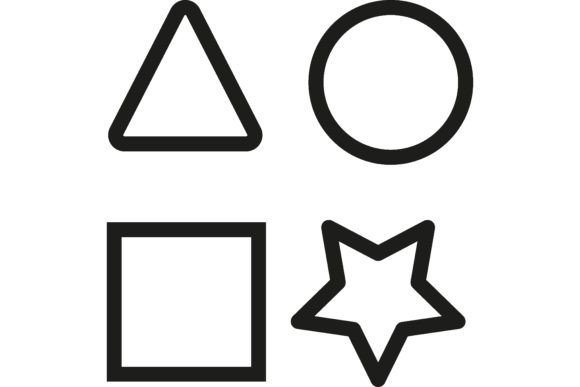
Icon of Geometric Shapes: Figure, Variation, and the Art of Visual Thinking
In a digital landscape saturated with complex imagery and hyper-realistic renders, there is a quiet resurgence in the power of simplicity. The Icon of Geometric Shapes, specifically focusing on the interplay between figure and variation, has emerged as more than just an aesthetic choice; it is a fundamental language of modern communication. Whether you are an educator designing a lesson plan for early childhood development, a marketer crafting a brand identity, or a developer building a user interface, understanding the geometry concept behind these forms is essential. This shift towards structured simplicity reflects a deeper human need to organize chaos into understandable patterns.
The relevance of this visual approach lies in its universality. A circle, a square, and a triangle are recognized across cultures and languages without translation. When we discuss the Icon of geometric shapes. Figure, variation, creativity, we are not merely talking about drawing tools; we are discussing the cognitive frameworks that help us process information. In an era where attention spans are fragmented, the ability to convey complex ideas through a single, well-crafted geometric icon is a superpower. It bridges the gap between abstract thought and immediate comprehension, making it indispensable for professionals navigating today's fast-paced workflows.
The Cognitive Power of Figure and Variation
At the heart of effective design and education is the relationship between the static "figure" and the dynamic "variation." The figure represents the core identity—a stable, recognizable form that anchors the viewer's understanding. Variation, on the other hand, introduces nuance, context, and evolution. Without variation, a geometric shape is rigid and lifeless; without a clear figure, variation becomes confusing noise. The Icon of Geometric Shapes. Figure, Variat serves as the perfect case study for this balance.
Consider how this plays out in professional environments. In business presentations, a simple bar chart (a variation of rectangles) communicates data trends instantly. If every bar were a different, irregular shape, the message would be lost. However, if all bars were identical without height variation, no data would be conveyed. The magic happens in the tension between the two. For educators, this principle is equally critical. When teaching children about geometry, presenting a standard triangle (the figure) and then showing how it can rotate, stretch, or combine to form new structures (the variation) fosters spatial reasoning and problem-solving skills.
This dynamic is particularly potent in child development. Young brains are wired to categorize the world around them. By introducing the concept of geometric figures first, and then exploring their variations, parents and teachers provide a scaffold for learning. It teaches children that while rules exist, they can be bent and manipulated creatively. This foundational understanding supports later learning in mathematics, engineering, and even art, proving that the geometry concept is far more than a school subject—it is a lens through which we view reality.
Educational Applications: From School Subjects to Real-World Skills
The integration of geometric thinking into modern curricula is evolving rapidly. Traditional methods often focused on rote memorization of formulas and definitions. Today, the focus has shifted toward application and creativity. The Icon of geometric shapes. Figure, variation, creativity framework encourages students to see math as a creative endeavor rather than a rigid set of constraints.
- Spatial Awareness: Manipulating geometric figures helps children understand volume, perspective, and scale, skills that are crucial for STEM fields.
- Critical Thinking: Analyzing how a figure changes under different conditions (variation) requires logical deduction and hypothesis testing.
- Visual Literacy: In a media-rich world, the ability to decode visual symbols is as important as reading text. Geometric icons are the alphabet of this visual language.
For adults returning to education or engaging in lifelong learning, these concepts remain relevant. Understanding the underlying geometry of design allows professionals to create more effective presentations, build better prototypes, and communicate ideas with greater clarity. It transforms the way we interact with technology and the built environment, turning passive observers into active interpreters of visual information.
Modern Workflows and the Shift to Minimalism
The rise of the Icon of Geometric Shapes. Figure, Variat in professional settings mirrors broader shifts in lifestyle and market preferences. As digital interfaces become more ubiquitous, users expect speed and efficiency. Complex illustrations take longer to load and longer to process cognitively. Clean, geometric icons load instantly and are understood immediately. This preference for minimalism is not just about style; it is a response to information overload.
In the realm of branding and marketing, companies are increasingly stripping away unnecessary details to reveal the core essence of their identity. A logo based on a strong geometric figure with subtle variations in color or line weight can convey trust, stability, and innovation simultaneously. This approach aligns with current trends where authenticity and clarity are valued over flashiness. Entrepreneurs and freelancers who master this visual language can differentiate their offerings by presenting their services with precision and impact.
Furthermore, the flexibility of geometric variation allows for scalability. An icon designed with a solid geometric foundation can adapt seamlessly from a tiny mobile app button to a massive billboard. This versatility is a practical necessity in a multi-channel marketing environment. Creators who understand the nuances of the geometry concept can ensure their work remains consistent and effective across all platforms, reducing the need for constant redesigns and maintaining brand integrity.
Creativity Within Constraints
One of the most misunderstood aspects of working with geometric shapes is the belief that it limits creativity. On the contrary, constraints often fuel innovation. When a designer or educator works within the boundaries of a specific figure, they are forced to find novel ways to express meaning through variation. This limitation sparks ingenuity, leading to solutions that might never have been discovered in an open-ended, unstructured environment.
For example, in software development, the use of geometric icons for navigation menus relies on this principle. The figure (a grid, a list, a home symbol) provides the anchor, while variations in state (hover effects, active states) guide the user. This creates a seamless experience that feels intuitive rather than instructional. Similarly, in architecture and urban planning, the repetition and variation of geometric forms create rhythm and harmony in the built environment, influencing how people move through and interact with spaces.
The evolution of this practice suggests a future where the distinction between art, science, and business continues to blur. The ability to think geometrically—seeing the figure and manipulating its variation—is becoming a core competency for the modern workforce. It empowers individuals to break down complex problems into manageable components and reassemble them into elegant solutions.
Practical Implications for Professionals and Everyday Readers
Whether you are a business owner looking to refresh your brand, a teacher seeking new classroom strategies, or a parent wanting to support your child's development, the principles of the Icon of Geometric Shapes. Figure, Variat offer tangible benefits. For businesses, adopting a geometric design language can streamline production processes and improve user engagement. It reduces cognitive load for customers, allowing them to make decisions faster and with more confidence.
For educators, incorporating these concepts into lesson plans can make abstract subjects more accessible. Using physical manipulatives or digital tools to explore figure and variation turns passive learning into an active discovery process. It encourages students to ask "what if?" questions, fostering a mindset of experimentation and resilience.
On a personal level, developing an eye for geometric patterns can enhance everyday observation. It changes how you perceive the world, revealing the hidden order in nature, architecture, and design. This heightened awareness can lead to more thoughtful consumption habits and a greater appreciation for the craftsmanship in the objects and systems we use daily.
Ultimately, the journey from a simple figure to a complex variation is a metaphor for growth itself. We start with a basic understanding of the world and, through experience and creativity, expand our perspective. The Icon of geometric shapes. Figure, variation, creativity reminds us that structure and freedom are not opposites but partners in the pursuit of clarity and expression. By embracing this duality, we can navigate the complexities of modern life with greater insight and purpose.